Page 86 - RSE - Results of the Apollon Project
P. 86
Results of the APolloN PRoject ANd coNceNtRAtiNg PhotovoltAic PeRsPective
Fresnel-lens-based systems have been developed for example by AEST, Amonix and Soitec/Concentrix. Although
50
reliable cost information is hard to get, it is estimated that Soitec is installing its 44 MWp system in South-Africa
for not less than 2.00 euros/Wp. From insider information, Amonix is offering its Fresnel-lens-based HCPV-systems
in Spain for around 2.50 euros/Wp.
One of the last estimates made in AEST (an Italian company that went out of business in 2012) for an improved
version (higher effciency, lower cost) of their Fresnel-lens-based module (Figure 90) reported minimum possible
installation costs of 2.48 euros/Wp.
So the indication is that HCPV-systems based on Fresnel lens technology can have installation costs from 2.00-
2.50 euros/Wp.
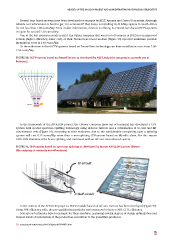
FiguRE 90. HCPV-system based on Fresnel lenses as developed by AEST, Italy (the company is currently out of
business)
In the framework of the APOLLON project, the CPower company (now out of business) has developed a CPV-
system with spatial spectrum splitting technology using dichroic mirrors and a combination of Si-cells and MJ-
concentrator cells (Figure 91). According to their estimates, due to the considerable complexity, such a splitting
system will cost 0.15 euros/Wp more than a non-splitting CPV-system based on MJ-cells alone. For this reason
APOLLON abandoned the beam splitting and continued with an off-axis mirror-based system.
FiguRE 91. CPV-system based on spectrum splitting as developed by former APOLLON partner CPower
(the company is currently out of business)
In the context of the APOLLON project a HCPV-module based on off-axis mirrors has been developed (Figure 92).
Using 39% effciency cells, the pre-qualifcation modules were measured to have a 30% CSTC effciency.
Several cost estimates have been made for these modules, assuming several degrees of design optimization and
various levels of automation of the production, in relation to the quantities produced.
50 www.prweb.com/releases/2013/6/prweb10799856.htm.
85