Page 25 - RSE - Results of the Apollon Project
P. 25
Results of the APolloN PRoject ANd coNceNtRAtiNg PhotovoltAic PeRsPective
Crystalline Silicon Solar cells for CPV
Since the birth of the photovoltaic industry, crystalline silicon solar cells have been considered expensive for
terrestrial application and concentration photovoltaic started to emerge as a promising solution to reduce their
cost 22,23 . The interest on very high effciency cSi solar cell for CPV application continued from the middle of 1990s till
the development of the Euclides project by Prof. Luque and his group at UPM-IES in Madrid.
Concentrator Si cell achieved remarkable results through the rear junction, back-contact device proposed by
Schwartz of Purdue University, subsequently developed by Swanson et Alia at Stanford University. The commercial
application of cSi in CPV was mainly exploited by SunPower and Amonix. Peak effciency value of 27.6% was obtained
24
at a concentration of ~100 X , but the rapid price collapse of crystalline silicon favoured a huge exploitation of the
fat plate cSi technology.
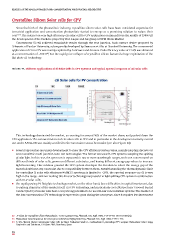
FiguRE 14. Different applications of Si Solar Cells in CPV systems and typical spectral response of cSi solar cells
This technology dominated the market, accounting for around 90% of the market share, and pushed down the
CPV application. The renewed interest of cSi solar cells in CPV and in particular in the development activity carried
out under APOLLON was mainly ascribed to the two main reasons hereunder (see also Figure 14):
p several approaches are under development to raise the CPV effciency system value, mainly adopting discrete or/
and monolithic multi-junction solar cell technologies. The former are used in CPV systems adopting the splitting
of solar light. In this case, the spectrum is separated in two or more wavelength ranges, each one concentrated on
different kinds of solar cells, grown on different substrates, and having different energy gap values to increase
light harvesting. This solution granted the CPV system developer the freedom to select the energy gap of the
materials without any constraint due to compatibility between them. Notwithstanding the thermodynamic limit
for crystalline Si solar cells effciency @ AM1.5 spectrum is limited to ~29%, the spectral response on cSi is very
high in the range ~600 nm making this kind of technology very useful in light splitting CPV system in combination
with III-V solar cells;
p the rapid growing PV fat plate technology market, on the other hand, faces diffculties in capital investment, due
to pulsing character of the market itself. cSi CPV technology, and particularly cost effective laser Grooved Buried
Contact (LGBC) cSi solar cells have a very strong potential to be used in low concentration systems. The market of
the low concentration CPV technology is expected to grow during the next years, since it requires less investment
22 A Vision for Crystalline Silicon Photovoltaics.- R. M. Swanson Prog. Photovolt: Res. Appl. 2006; 14:443–453 DOI 10.1002/pip.
23 Photovoltaic Concentration at the Onset of its Commercial Deployment Prog. Photovolt: Res. Appl. 2006; 14:413–428.
24 27.6% Effcient Silicon Concentrator Solar Cells for Mass Production Slade A., Garboushian V. proceeding 20 European Photovoltaic Solar Energy
th
Conference and Exhibition, 6-10 June 2005, Barcelona, Spain.
24