Page 29 - RSE - Results of the Apollon Project
P. 29
27 Results of the APOLLON project and Concentrating Photovoltaic perspective
27 Results of the APOLLON project and Concentrating Photovoltaic perspective
In spite of the fact that DJ solar cells have only one tunnel diode, while TJ ones have two ones, it was demonstrated
that both devices can work at high concentration factor. Furthermore, considering that the manufacturing costs are
comparable for both devices as well as the yield, it has been showed that TJs have to be preferred with respect to
In spite of the fact that DJ solar cells have only one tunnel diode, while TJ ones have two ones, it was demonstrated
DJs for more competitive CPV systems, since it is possible to get higher value of the CEPI. TJ solar cells have
that both devices can work at high concentration factor. Furthermore, considering that the manufacturing costs are been
Results of the APolloN PRoject ANd coNceNtRAtiNg PhotovoltAic PeRsPective
comparable for both devices as well as the yield, it has been showed that TJs have to be preferred with respect to
characterized till 4000 suns, showing excellent efficiency of 35,3% @ 2000 suns (see Figure 20).
DJs for more competitive CPV systems, since it is possible to get higher value of the CEPI. TJ solar cells have been
characterized till 4000 suns, showing excellent efficiency of 35,3% @ 2000 suns (see Figure 20).
FiguRE 20. TJ InGaP/InGaAs/Ge ENE solar cells performances versus concentration
Cell ID: K11
90
80 90 FF Cell ID: K11
70 80 FF 35
Steady-state solar simulator 35
70
60 60 Steady-state solar simulator Eff Eff 30 30
50
50
flash lamp solar simulator
V oc , V FF, % 3.2 V oc , V FF, % 3.2 flash lamp solar simulator 25 Efficiency, % Efficiency, %
25
2.8 2.8 Voc Voc
2.4 20
AM1.5D LAOD spectrum
2.4 AM1.5D LAOD spectrum 20
2.0 15
2.0 1 10 100 1000 15
100
1 10 Concentration, X 1000
Figure 20. TJ InGaP/InGaAs/Ge ENE solar cells performances versus concentration
Concentration, X
Figure 20. TJ InGaP/InGaAs/Ge ENE solar cells performances versus concentration
TJ with new concepts
tj with New Concepts
TJ with new concepts
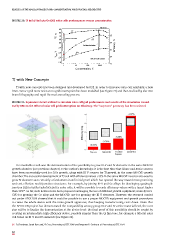
TJ with new concepts have been designed and developed by RSE. In order to increase the solar cell reliability, a new
TJ with new concepts has been designed and developed by RSE. In order to increase solar cell reliability, a new
front contact grid more resistant to grid interruption has been modelled (see Figure 21) and then realized by
front contact grid more resistant to grid interruption has been modelled (see Figure 21) and then realized by electron
electron beam lithography and rapid thermal annealing process.
TJ with new concepts have been designed and developed by RSE. In order to increase the solar cell reliability, a new
beam lithography and rapid thermal annealing process.
front contact grid more resistant to grid interruption has been modelled (see Figure 21) and then realized by
electron beam lithography and rapid thermal annealing process.
FiguRE 21. Equivalent circuit utilized to simulate solar cell grid performance and results of the simulation carried
out by RSE on the effect of solar cell grid interruption on effciency. the “carpenter” geometry has been selected
Figure 21. Equivalent circuit utilized to simulate the solar cell grid performances and results of the simulation carried out by
RSE on the effect of the solar cell grid interruption on the efficiency. The “carpenter” geometry has been selected.
A remarkable result concerned the demonstration of the possibility to grow in the same MOCVD growth chamber III-
V and IV elements (see previous chapter). As far as the author knowledge is concerned, it is the first time that Silane
and IBuGe sources have been successfully used for SiGe growth, along with III-V sources for TJ growth, in the same
A remarkable result was the demonstration of the possibility to grow III-V and IV elements in the same MOCVD
MOCVD growth chamber. The successful development of TJ cell with efficiency values >35% in the same MOCVD
Figure 21. Equivalent circuit utilized to simulate the solar cell grid performances and results of the simulation carried out by
growth chamber (see previous chapter). To the author’s knowledge, it is the frst time that Silane and IBuGe sources
RSE on the effect of the solar cell grid interruption on the efficiency. The “carpenter” geometry has been selected.
have been successfully used for SiGe growth, along with III-V sources for TJ growth, in the same MOCVD growth
chamber. The successful development of TJ cell with effciency values >35% in the same MOCVD reactor also used to
A remarkable result concerned the demonstration of the possibility to grow in the same MOCVD growth chamber III-
grow IV elements was certainly a fundamental and initial proof which has opened the way toward more promising
V and IV elements (see previous chapter). As far as the author knowledge is concerned, it is the first time that Silane
and cost effective multi-junction structures. For example, by joining III-V and Ge alloys for developing quadruple
and IBuGe sources have been successfully used for SiGe growth, along with III-V sources for TJ growth, in the same
junction (QJ) InGaP/InGaAs/SiGeSn/Ge solar cells, it will be possible to reach effciency values with a target higher
MOCVD growth chamber. The successful development of TJ cell with efficiency values >35% in the same MOCVD
26
than 44% . So far, such devices have been proposed envisaging the use of different growth equipment, namely UHV-
CVD for growing the Ge alloy and the MOCVD one for growing the III-V elements. However, the research carried
out under APOLLON showed that it could be possible to use a proper MOCVD equipment and growth procedures
to create the whole device with the same growth apparatus, thus keeping manufacturing costs down. Given that
the APOLLON project has demonstrated the compatibility among group III-V and IV at the material level, the next
step will be to fnalize the demonstration at the device level: the fnal proof of this possibility should be sought by
creating an intermediate high effciency device, possibly simpler than the QJ fnal one, for example a bifacial solar
cell based on III-V and IV elements (see Figure 22).
26 D.J.Friedman, Sarah Kurz and J.F Geisz, Proceeding of IEEE 2002 and Benjamin R. Conley at al. Proceeding of IEEE 2011.
28
27 Results of the APOLLON project and Concentrating Photovoltaic perspective
In spite of the fact that DJ solar cells have only one tunnel diode, while TJ ones have two ones, it was demonstrated
that both devices can work at high concentration factor. Furthermore, considering that the manufacturing costs are
comparable for both devices as well as the yield, it has been showed that TJs have to be preferred with respect to
In spite of the fact that DJ solar cells have only one tunnel diode, while TJ ones have two ones, it was demonstrated
DJs for more competitive CPV systems, since it is possible to get higher value of the CEPI. TJ solar cells have
that both devices can work at high concentration factor. Furthermore, considering that the manufacturing costs are been
Results of the APolloN PRoject ANd coNceNtRAtiNg PhotovoltAic PeRsPective
comparable for both devices as well as the yield, it has been showed that TJs have to be preferred with respect to
characterized till 4000 suns, showing excellent efficiency of 35,3% @ 2000 suns (see Figure 20).
DJs for more competitive CPV systems, since it is possible to get higher value of the CEPI. TJ solar cells have been
characterized till 4000 suns, showing excellent efficiency of 35,3% @ 2000 suns (see Figure 20).
FiguRE 20. TJ InGaP/InGaAs/Ge ENE solar cells performances versus concentration
Cell ID: K11
90
80 90 FF Cell ID: K11
70 80 FF 35
Steady-state solar simulator 35
70
60 60 Steady-state solar simulator Eff Eff 30 30
50
50
flash lamp solar simulator
V oc , V FF, % 3.2 V oc , V FF, % 3.2 flash lamp solar simulator 25 Efficiency, % Efficiency, %
25
2.8 2.8 Voc Voc
2.4 20
AM1.5D LAOD spectrum
2.4 AM1.5D LAOD spectrum 20
2.0 15
2.0 1 10 100 1000 15
100
1 10 Concentration, X 1000
Figure 20. TJ InGaP/InGaAs/Ge ENE solar cells performances versus concentration
Concentration, X
Figure 20. TJ InGaP/InGaAs/Ge ENE solar cells performances versus concentration
TJ with new concepts
tj with New Concepts
TJ with new concepts
TJ with new concepts have been designed and developed by RSE. In order to increase the solar cell reliability, a new
TJ with new concepts has been designed and developed by RSE. In order to increase solar cell reliability, a new
front contact grid more resistant to grid interruption has been modelled (see Figure 21) and then realized by
front contact grid more resistant to grid interruption has been modelled (see Figure 21) and then realized by electron
electron beam lithography and rapid thermal annealing process.
TJ with new concepts have been designed and developed by RSE. In order to increase the solar cell reliability, a new
beam lithography and rapid thermal annealing process.
front contact grid more resistant to grid interruption has been modelled (see Figure 21) and then realized by
electron beam lithography and rapid thermal annealing process.
FiguRE 21. Equivalent circuit utilized to simulate solar cell grid performance and results of the simulation carried
out by RSE on the effect of solar cell grid interruption on effciency. the “carpenter” geometry has been selected
Figure 21. Equivalent circuit utilized to simulate the solar cell grid performances and results of the simulation carried out by
RSE on the effect of the solar cell grid interruption on the efficiency. The “carpenter” geometry has been selected.
A remarkable result concerned the demonstration of the possibility to grow in the same MOCVD growth chamber III-
V and IV elements (see previous chapter). As far as the author knowledge is concerned, it is the first time that Silane
and IBuGe sources have been successfully used for SiGe growth, along with III-V sources for TJ growth, in the same
A remarkable result was the demonstration of the possibility to grow III-V and IV elements in the same MOCVD
MOCVD growth chamber. The successful development of TJ cell with efficiency values >35% in the same MOCVD
Figure 21. Equivalent circuit utilized to simulate the solar cell grid performances and results of the simulation carried out by
growth chamber (see previous chapter). To the author’s knowledge, it is the frst time that Silane and IBuGe sources
RSE on the effect of the solar cell grid interruption on the efficiency. The “carpenter” geometry has been selected.
have been successfully used for SiGe growth, along with III-V sources for TJ growth, in the same MOCVD growth
chamber. The successful development of TJ cell with effciency values >35% in the same MOCVD reactor also used to
A remarkable result concerned the demonstration of the possibility to grow in the same MOCVD growth chamber III-
grow IV elements was certainly a fundamental and initial proof which has opened the way toward more promising
V and IV elements (see previous chapter). As far as the author knowledge is concerned, it is the first time that Silane
and cost effective multi-junction structures. For example, by joining III-V and Ge alloys for developing quadruple
and IBuGe sources have been successfully used for SiGe growth, along with III-V sources for TJ growth, in the same
junction (QJ) InGaP/InGaAs/SiGeSn/Ge solar cells, it will be possible to reach effciency values with a target higher
MOCVD growth chamber. The successful development of TJ cell with efficiency values >35% in the same MOCVD
26
than 44% . So far, such devices have been proposed envisaging the use of different growth equipment, namely UHV-
CVD for growing the Ge alloy and the MOCVD one for growing the III-V elements. However, the research carried
out under APOLLON showed that it could be possible to use a proper MOCVD equipment and growth procedures
to create the whole device with the same growth apparatus, thus keeping manufacturing costs down. Given that
the APOLLON project has demonstrated the compatibility among group III-V and IV at the material level, the next
step will be to fnalize the demonstration at the device level: the fnal proof of this possibility should be sought by
creating an intermediate high effciency device, possibly simpler than the QJ fnal one, for example a bifacial solar
cell based on III-V and IV elements (see Figure 22).
26 D.J.Friedman, Sarah Kurz and J.F Geisz, Proceeding of IEEE 2002 and Benjamin R. Conley at al. Proceeding of IEEE 2011.
28