Page 49 - RSE - Results of the Apollon Project
P. 49
Results of the APolloN PRoject ANd coNceNtRAtiNg PhotovoltAic PeRsPective
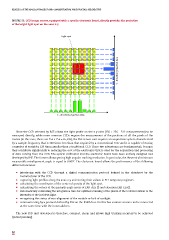
FiguRE 53. CCD image sensor, equipped with a specifc electronic board, directly provides the projection
of the bright light spot on the axes x-y
Light spot
Y - direction projection data
X - direction projection data
Since the CCD selected by RSE allows the light profle on the x-y axes (256 + 256 = 512 measurements) to be
measured directly, while more common CCDs require the measurement of the positions of all the pixels of the
matrix (in this case, these are 256 x 256 = 65,536), the RSE sensor unit requires an acquisition system characterized
by a sample frequency that is 128 times less than that required by a conventional CCD and it is capable of storing
a number of variables 128 times smaller than a traditional CCD. These two advantages are fundamentals, because
they contribute signifcantly to reducing the cost of the electronics that is used for the acquisition and processing
of data coming from the CCD. The optical collimator and the electronic board have been entirely designed and
developed by RSE. The former allows getting high angular tracking resolution. In particular, the theoretical minimum
measurable misalignment angle is equal to 0.009°. The electronic board allows the performance of the following
different functions:
p interfacing with the CCD through a digital communication protocol defned in the datasheet by the
manufacturer of the CCD.
p capturing light profles along the axes x-y and storing their values in 512 temporary registers.
p calculating the coordinates of the center of gravity of the light spot.
p calculating the values of the azimuth angle errors of ERR_AZs (°) and elevation ERR_ELs(°).
p Automatically controlling the integration time for optimal scanning of the pixels of the CCD in relation to the
intensity of the incident light.
p recognizing the status of non-alignment of the module or lack of sunlight.
p communicating by a protocol defned by RSE on the RS485 bus. On this bus various sensors can be connected
at the same time with their own address.
The new PSD unit developed is therefore, compact, cheap and allows high tracking accuracy to be achieved
(patent pending).
48