Page 45 - RSE - Results of the Apollon Project
P. 45
RESuLtS OF thE APOLLON PROjECt ANd CONCENtRAtiNg PhOtOvOLtAiC PERSPECtivE
FiguRE 49. Profle of temperature and current at thermocycle tests
I=I
Current
test
I=0
T max Current is absent if T<25° C
Temperature Strat at room
temperatures
-40° C
Time 0 2 4 6 8 10 12 14 16 18 20
integrated SOE (SE SRtiiE, ASSE)
The development of secondary optics (SOE) to increase the acceptance angle of reception of solar radiation is
a fundamental aspect in CPV system development. SE SRTIIE and ASSE developed a different kind of SOE directly
integrated on solar receivers.
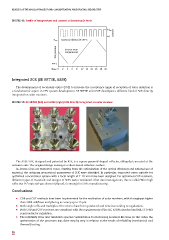
FiguRE 50. SE SRTIIE (left) and ASSE (right) SOE directly integrated on solar receiver
The ASSE SOE, designed and patented by RSE, is a square pyramid shaped refector, obliquely truncated at the
entrance side. The original design envisages a silver-based refective surface.
SE SRTIIE SOEs are truncated cones. Starting from the optimization of the optical effciency and rational use of
material, the optimum geometrical parameters of SOE were identifed. In particular, truncated cones suitable for
optimized concentrator system with a focal length of F=70 mm have been designed. For optimized COF-receivers,
different types of materials and designs of SOEs were considered. After due investigations, the so called “Miro high
refective 95” material was chosen (Alanod, Germany) for SOEs manufacturing.
Conclusions
p COB and COF methods have been implemented for the realization of solar receivers, with throughput higher
than 3000 cell/hour and placing accuracy up to 15 µm.
p Both single cells and multiple-cell receivers have been produced and tested according to regulations.
p Both COB and COF-receivers are compliant with the requirements of the IEC 62108 standard and MIL STD-883
semiconductor regulation.
p The reliability issue was taken into special consideration for increasing receivers life time, in this sense the
optimization of the processes was done step by step in relation to the result of reliability (mechanical and
thermal) testing.
44