Page 70 - RSE - Results of the Apollon Project
P. 70
Results of the APolloN PRoject ANd coNceNtRAtiNg PhotovoltAic PeRsPective
(JRC-ESTI), expressed in % of the peak irradiance. Sharp peaks are mainly due to different instrument FWHM not
completely reduced by data smoothing and small (1 nm approx.) wavelength misalignment. The average differences
for the reported spectra are below ±3.5% with associated standard deviation below 4.5%.
The JRC ESTI instrument was chosen as reference as it was kept permanently in operation during the entire
intercomparison and characterized for uncertainty. The reference instrument, as already known from previous
intercomparison sessions, clearly underestimates spectral irradiance below 380 nm. By averaging the deviation
plots of a full day acquisition, information on instrument stability can be inferred.
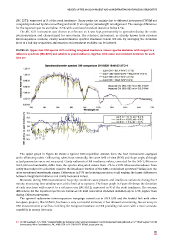
FiguRE 80. Upper: four DNI spectra with resulting integrated irradiance. Lower: spectra deviation with respect to a
reference spectrum (JRC-ESTI) and relative to peak irradiance, together with mean and standard deviation for each
data set
The upper graph in Figure 80 shows a typical DNI acquisition dataset from the four instruments equipped
with collimating tubes. Collimating tubes have nominally the same feld of view (FOV) and slope angle, although
actual parameters were not measured. Cavity radiometer DNI irradiance values, corrected for the 360-1,700 nm or
360 1,050 nm bandwidth, differ from the spectra integrated values from -7% to +1.9%. Measured irradiance from
34
cavity was reduced to a fraction equal to the irradiance fraction of the AM1.5D standard spectrum falling into the
afore mentioned wavelength ranges. Differences in FOV and pointing precision could explain the larger differences
between integrated irradiance and cavity measured values.
Moreover, during DNI measurements hazy sky conditions were present and irradiance variations during the 4
minute measuring time window were at the limit of acceptance. The lower graph in Figure 80 shows the deviation
of each spectrum with respect to a reference one (JRC-ESTI), expressed in % of the peak irradiance. The average
differences for the reported spectra are below ±2.5% with associated standard deviation up to 6.4%, higher than
during GNI measurements.
The spectral radiometer intercomparison campaign carried out in APOLLON and the fruitful link with other
European projects, like SOPHIA, has been a very successful initiative, it has allowed ascertaining the accuracy in
DNI measurements as well as enriching the European Database on DNI providing end-users with a more accurate
capability in energy forecasts.
34 ASTM Standard G173, 2008, “Standard Tables for Reference Solar Spectral Irradiances: Direct Normal and Hemispherical on 37° Tilted Surface”, ASTM
Internationa, West Conshohocken, PA, 2008, DOI: 10.1520/G0173-03R08, www.astm.org.
69